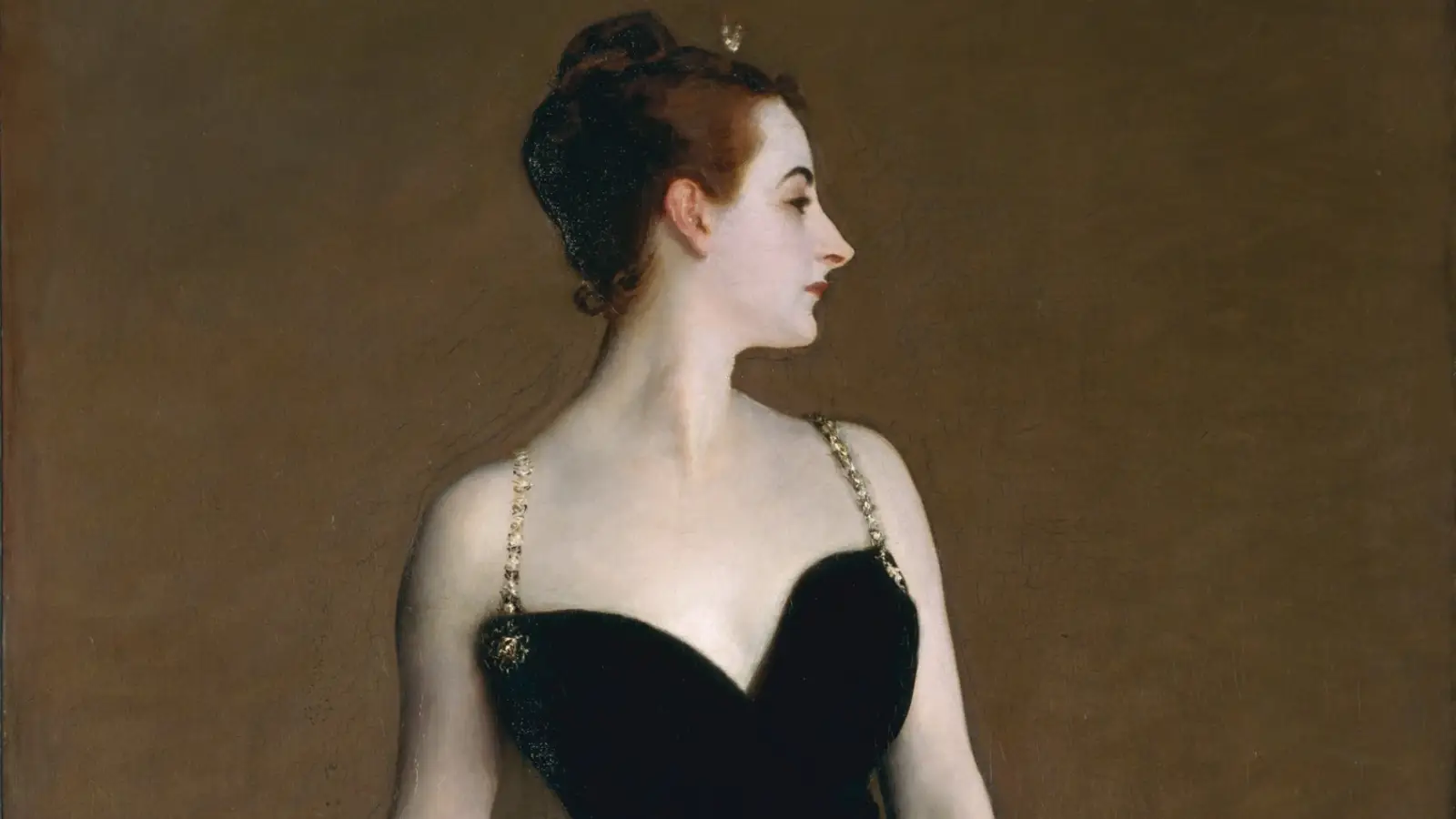
Every painter hits the moment where a painting feels wrong but the color looks fine. You adjust the hue, you lighten a passage, you add more detail — and it still doesn't work. Nine times out of ten, the problem isn't the color. It's the notan art beneath it.
Notan (pronounced no-tahn) is the arrangement of dark and light shapes across a composition — stripped of color, texture, and detail. When the notan works, the painting works. When it doesn't, no amount of color mixing will save it. Learning to see and plan notan is one of the highest-leverage skills a painter can develop, and it's surprisingly simple to practice.
What Is Notan in Art?
Notan is a Japanese term — 濃淡 — meaning "dark-light." In Western art instruction, it refers to the overall pattern of dark and light masses in a composition, considered as flat, interlocking shapes rather than as realistic objects.
The concept was introduced to Western artists in the late 19th century. Arthur Wesley Dow, the painter and Columbia University teacher whose Teachers College course Georgia O'Keeffe attended, defined notan in his landmark 1899 book Composition: Understanding Line, Notan and Color as dealing with "the harmony resulting from the combination of dark and light spaces." For Dow, notan was one of three structural elements of the "space arts" — line, notan, and color.
The key word is harmony. A notan study asks a simple question: if you reduced this painting to only black and white — no grays, no color, just dark shape and light shape — would those shapes balance? Would they lock together like puzzle pieces? Would the composition read clearly from across a room?
If the answer is yes, the underlying architecture is sound and color will lift it. If no, the painting will fight you no matter what you do to it.
Why Painters Use Notan Studies
A notan study is traditionally done before a painting begins — in pencil, ink, or charcoal, often in a few minutes — to test a composition at its most fundamental level. The reduction to two values strips away every distraction and forces you to confront the design itself.
Three things become immediately visible in a notan that are nearly invisible in full color:
1. Whether the composition has a clear focal area. In a two-value notan, the eye goes to the area of highest contrast — where dark meets light. If that area is where you intended the focal point to be, your value structure is working. If the eye jumps to an unintentional corner or edge, you'll see it instantly in the notan.
2. Whether the dark and light masses are balanced. A painting where dark and light are roughly equal in visual weight tends to feel stable and complete. One where either dominates excessively can feel heavy, empty, or unresolved — though deliberate imbalance is also a powerful tool, as in Rembrandt's low-key portraits where dark vastly outweighs light.
3. Whether shapes are interesting. Flat, rectangular, symmetrical shapes feel static. Irregular, interlocking, varied shapes feel alive. The notan reveals the actual shape design beneath the subject matter.
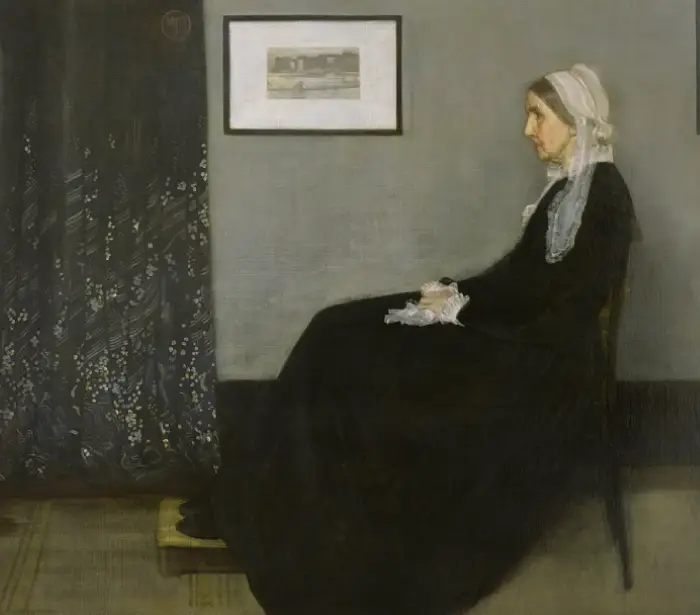
Japanese Notan vs. Western Value Studies: What's the Difference?
You may already be familiar with the value sketch — a quick tonal drawing in 3, 5, or 7 values to map out the light and shadow in a scene. Notan is related but distinct. (For a full treatment of how those tonal steps work and why they matter, see the value scale in art.)
A value sketch is descriptive — it maps how light actually falls on forms in the real world (or in your imagination). It can use as many tonal steps as you like, and it's usually grounded in the logic of a specific light source.
A notan study is compositional — it reduces everything to just two values (black and white) to test the abstract design. There's no light source. There's no form. There's only: which shapes are dark, and which are light, and do they balance?
In traditional Japanese aesthetics — particularly in sumi-e ink painting and woodblock prints — notan was not a preparatory study but the finished work itself. Hokusai's Great Wave is pure notan: dark wave, light sky, and the small dark shapes of the boats and mountain playing against each other. The color in the print (that distinctive Prussian blue) is secondary to the shape arrangement.
Japanese woodblocks, which reached Western painters in the late 19th century, show an abstract shape-design that European academic painting had largely neglected. The notan study became a bridge — a way to think about composition in the flat, shape-based way these prints demonstrate.
How to Do a Notan Study
The traditional method takes five minutes and costs nothing beyond a pencil and a piece of paper.
Step 1: Choose your composition
Work from a reference photo, a master painting, or a sketch of your own idea. It's easier to start with a high-contrast reference — a black-and-white photo, or a painting with a clear light source like a Caravaggio.
Step 2: Draw a small thumbnail rectangle
Around 3–4 inches wide. Small forces you to think in masses rather than details.
Step 3: Assign every element to dark or light — no middle ground
This is the critical discipline. Every passage in your reference gets assigned to one of two values: dark or light. If something is mid-value (a gray sky, a beige wall), you must make a decision: does it read as part of the dark mass or the light mass? This forced choice reveals how committed your composition is.
Traditionally done in black ink or with a 6B pencil filling in the darks, leaving the lights as bare paper.
Step 4: Step back and assess
- Does the eye land where you intended?
- Do the dark and light shapes feel roughly balanced (or deliberately imbalanced in a purposeful way)?
- Are the shapes themselves interesting — varied in size, irregular in edge, interlocking rather than floating?
- Is there a clear dominant value? (Most successful paintings have one value that occupies roughly 60–70% of the picture plane, with the other at 30–40%.)
Step 5: Revise before you paint
This is the whole point. If the notan study reveals a problem — a tangent, a dead center placement, an accidental bull's-eye — fix it now in pencil, not in three hours of overpainting.
Reading Notan in Master Paintings
Understanding notan in the abstract is useful. Seeing it in paintings you already know is where it becomes a real tool.
Rembrandt van Rijn — Low-Key Notan
Rembrandt is the master of low-key notan: dark massively dominates, with small, precisely placed lights that draw the eye directly to the face or hands. In The Night Watch (1642, Rijksmuseum), the dark background and dark clothing of most figures creates a single vast dark mass. The two illuminated figures in the center — Captain Cocq in black with a lit collar, his lieutenant in bright yellow — are islands of light in that darkness. Remove all color and all detail, and those light shapes still anchor the composition.
What's instructive: in The Night Watch the lights are not evenly distributed. They cluster. Scattered lights create confusion; massed lights create emphasis and hierarchy.
Johannes Vermeer — High-Key Notan
Vermeer tends toward high-key notan: light dominates, with darks used as accents. The Milkmaid (c. 1657–58, Rijksmuseum) is primarily a composition of cream, white, and pale gray — the wall, the woman's cap and collar, the milk stream, the tablecloth. The darks (her blue apron, the basket, the shadow) are relatively small but strategically placed to frame the central light figure. The notan is roughly 70% light, 30% dark — calm, domestic, orderly.
Caspar David Friedrich — Silhouette Notan
A single powerful silhouette — a dark figure or landform against a light sky — can carry a whole composition. Wanderer above the Sea of Fog (1818) is almost a pure notan: the dark figure connects to the dark foreground rocks, and the light fog fills the middle and background. There's no ambiguity about where the eye goes. The silhouette is the painting.
This is the lesson: when in doubt, simplify. One strong dark against one open light is often more powerful than a complex arrangement of five values.
Diagnosing Your Own Work with Notan
If a painting isn't working and you can't identify why, the fastest diagnostic is to squint hard until the details blur and only the dark/light masses remain. (The squint test is the informal version of a notan study — and it's why every painting teacher tells you to squint.)
Three problems you'll see immediately:
Scattered darks with no anchor. If your darks are isolated spots across the canvas rather than connected masses, the composition lacks structure. Connect them — run a shadow from one dark to another, or simplify by making the small darks part of the large dark.
Competing focal areas. If squinting reveals two or three equally bright spots, your hierarchy is broken. One should be brightest; the others should step down. (This is the same problem explored in depth in focal point in painting — the notan makes it visible at a glance.)
A dead-center bulls-eye. If the lightest light sits in the exact center of the canvas, the eye stops there and has nowhere to go. Shift it — even slightly off-center — and the composition gains movement.
See Your Painting's Notan Instantly
The squint test is useful but imprecise. Critico's value-study tool does the same thing digitally — and with more control. Drop any painting into Critico and switch to the 3-tone or even 2-tone-style view to see your notan instantly.
The 3-tone view echoes an exercise in Dow's Composition, which has students mix "three values, light, medium and dark" and try several arrangements of them in a design. Critico adds the "Normalized" mode, which is particularly useful for high-key or low-key paintings where a fixed scale might collapse everything into one tone.
Try it on your own work-in-progress: if the 3-tone view looks confused, your notan needs work before you go further with color.
Frequently Asked Questions
- What does notan mean in art? Notan (濃淡) is a Japanese term meaning "dark-light." In art, it refers to the arrangement and balance of dark and light masses in a composition, considered as flat, interlocking shapes independent of color or detail. Arthur Wesley Dow adopted the Japanese word for Western art instruction in his 1899 book Composition.
- What is the difference between a notan and a value study? A value study maps the tonal range of a scene across multiple steps (3, 5, or 7 values) to understand how light falls on form. A notan reduces the composition to just two values — pure dark and pure light — to test the abstract shape design. A value study is descriptive; a notan is compositional.
- How do you make a notan drawing? Draw a small thumbnail rectangle (3–4 inches). Working from your reference, assign every element to either dark or light — no middle ground. Fill in the darks in black ink or pencil, leave the lights as bare paper. The goal is to test whether your dark and light shapes balance and whether the focal area reads clearly.
- What are notan designs? Notan designs are compositions built entirely on the contrast and balance of dark and light shapes — like cut-paper designs or Japanese mon (family crests). They're often used as exercises to develop an eye for abstract shape design before tackling full paintings.
- Did Japanese artists use notan? Yes — though "notan" as a term for Western painters comes from Arthur Wesley Dow, who adopted the Japanese word in Composition. Traditional Japanese woodblock prints (ukiyo-e) and sumi-e ink painting are inherently notan-based: Hokusai's Great Wave, for example, is built on two interlocking dark/light masses with very little intermediate gray.
Related reading
- The Value Scale in Art — how the full tonal range works and why values outrank color.
- Focal Point in Painting — where to place the highest contrast once your notan gives you a clear dominant zone.
- Emphasis in Art — the five techniques painters use to direct the viewer's eye, and how notan underlies most of them.